Where Conservation Meets Community
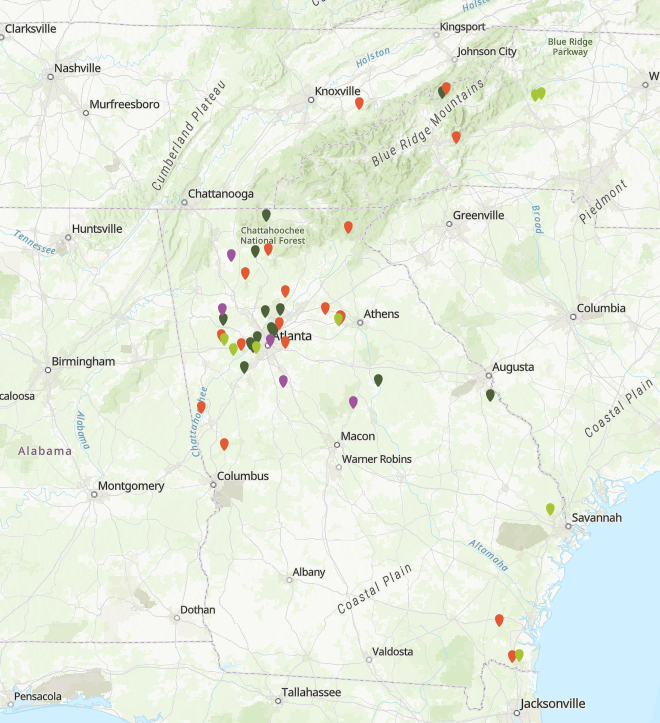
At Southeastern Trust for Parks and Land, we believe that protecting natural lands creates lasting benefits for people, communities, and the environment. Across the Southeast, we work to conserve special places, support environmental stewardship and science education, and create opportunities for people to explore, connect with, and enjoy the outdoors.
Our work brings together landowners, community organizations, public agencies, and individuals who share a commitment to protecting the Southeast’s natural heritage. Through conservation partnerships, grants, and generous community support, we help preserve the places that make our communities special—and ensure they remain a part of our shared future.
Together, we’re protecting the land we love and strengthening the communities that call it home.
Featured Property
Canongate Nature Park
Upon acquiring this property, STPAL filed a perpetual conservation deed restriction that requires public access and use as a park. The property contains a small intermittent headwater branch that flows into Persimmon Creek, draining into a subdivision pond, and then becomes part of the Upper Flint River watershed.
VIEW PROPERTYFeatured Property
Aerotropolis Nature Park
This property is located in the aerotropolis zone of Atlanta’s Hartsfield Jackson International Airport in the City of South Fulton off Camp Creek Parkway. SE Trust collaborated with Bearings Bike . . .
VIEW PROPERTYFeatured Property
Fightingtown Creek Nature Park
Fightingtown Creek Nature Park has 12 miles of flowy natural surface hike and bike trails through beautiful southern Appalachian land.
VIEW PROPERTY






Southeastern Trust for Parks and Land
SE Trust is a 501(c)(3) organization dedicated to conserving land and making it available for public use. CONSERVATION. RECREATION. COMMUNITY 💚📍Find your place today! www.stpal.org #SETrust

Our next feature for Fall Foliage Friday is Bald Mountain Creek Nature Park, nestled in the beautiful mountains of North Carolina!
This preserved property holds a special place in the Southeastern Trust’s history, as it was the first property donated to the Trust outside of Georgia. Today, its 730 acres offer breathtaking views and miles of scenic hiking trails for visitors to explore.
We’re grateful to celebrate and help preserve places like this, especially during the vibrant colors of fall!
0 CommentsComment on Facebook
While last week’s Plant Spotlight featured a native fern, this week we’re shifting our focus to the opposite: an invasive fern found across many of our parks!
Autumn Fern is considered a relatively new invader in the Southeast and has been rapidly spreading through natural areas after being introduced as an ornamental garden plant. Unfortunately, its ability to spread quickly can allow it to outcompete native fern species, which provide valuable habitat and resources for native insects, amphibians, and mammals.
0 CommentsComment on Facebook